Playground safety.
When families hear that I design playgrounds and that I am a Certified Playground Safety Inspector (CPSI), the most common question I receive is, “are you the one taking the fun out and making playgrounds too safe?” My reply is no, but that is a simple answer to a complex question.

Sweet Street Park - Grand Rapids
Great playground design requires an intentional harmony of safety with risk versus reward. The playground environment should be challenging enough to encourage problem-solving and build physical strength (the reason playgrounds are so fun) but also must have features in place to protect children from serious harm. The structures should be exciting but with minimal opportunity for significant or life-threatening injuries. Playground owners want to limit their liability, while keeping the playground interesting, engaging, and inclusive for all abilities and skill levels.
This is where playground safety guidelines come into play, and where a CPSI can provide analytical assistance in determining the level of risk at your playground. A CPSI is trained by the National Parks and Recreation Association (NRPA) on safety standards, including American Society for Testing and Materials (ASTM) standards, ADA guidelines, and the US Consumer Product Safety Commission. The training covers everything from equipment fall heights and safety zones to materials, fasteners, and level of risk for different situations.
If you own or manage a play area, you may be wondering what your next steps should be. Perhaps you want to replace some equipment, add onto the space, or are just maintaining it. If you intend on adding or renovating part of a playground, the whole play area must be brought up to code. Here are some inspection options to understand the safety of your playground and determine if corrections are needed.
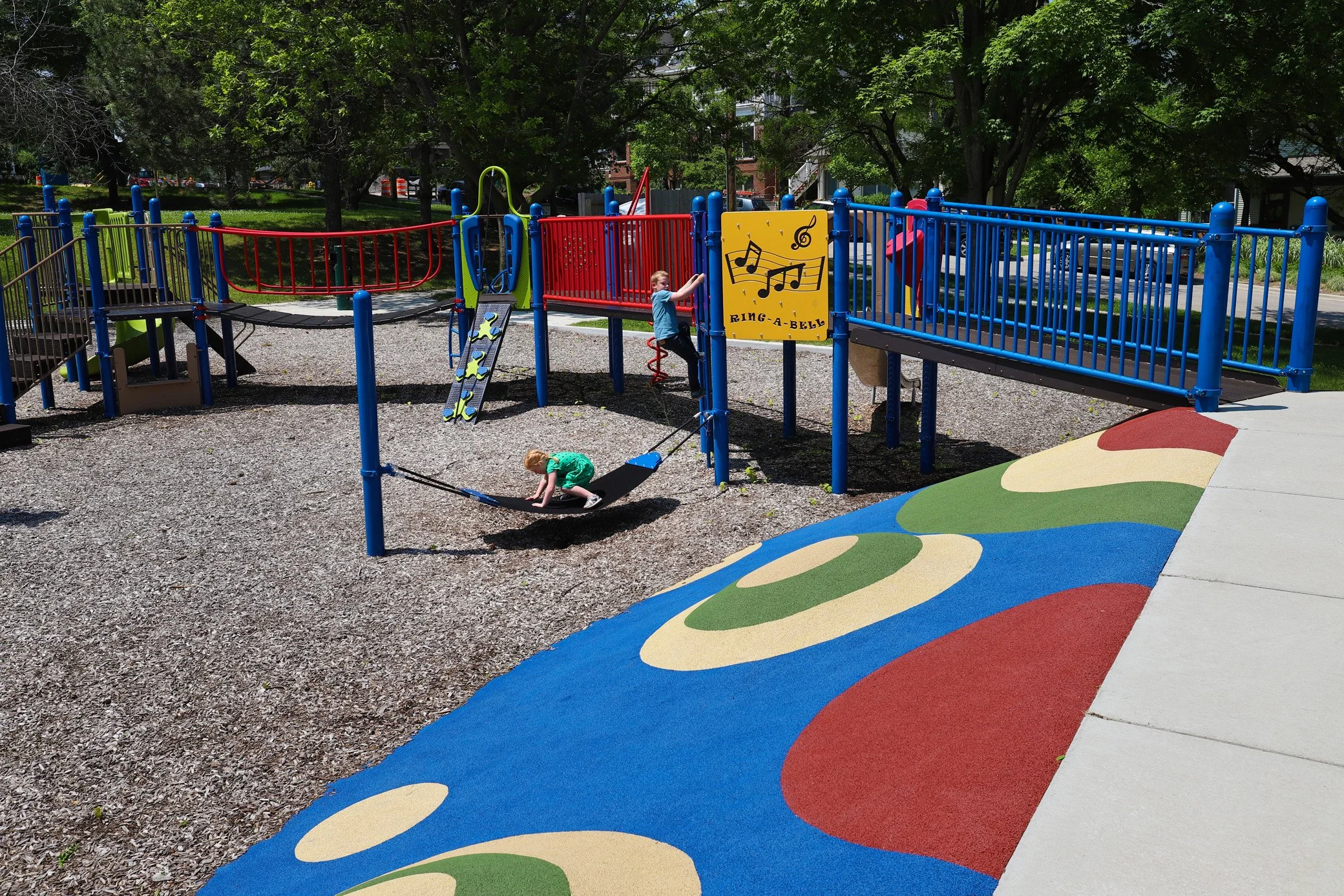
Coit Park - Grand Rapids
1. Evaluate the play area and establish a baseline.
Comprehensive Playground Compliance Inspection or Post-Installation Playground Inspection. This is a complete audit of the play area based on national standards and guidelines, licensing authority requirements (childcare facilities and schools), local building codes, and construction documents. This process includes a CPSI’s visit to the site, assessment of each piece of equipment, the spatial layout, protective surfacing, and general environment and site amenities such as fences and nearby hazards. This comprehensive audit also includes:
The Hazard Identification and Risk Assessment which assigns a priority level for each issue based on the potential severity of injury. This is useful in determining which components should be addressed first or which should be closed off from public use until remedied.
The Barrier-Free Accessible Use Playground Assessment which reviews accessibility guidelines to ensure there are accessible routes and play components. This assessment can be conducted as part of a comprehensive inspection or as a standalone assessment.
2. For ongoing maintenance and repairs, consider regular inspections.
Routine Visual Inspections can be conducted daily, weekly, or monthly depending on the usage of the play area. These can be conducted by maintenance staff or certified inspectors.
Operational Inspections require additional expertise to identify maintenance needs and repairs. This includes reviewing an inventory of play equipment and safety surfacing. Playground equipment manufacturers may have warranties; the owner should always contact the manufacturer for assistance on specific components and replacement parts.
After safety concerns are identified through any of these inspections, address repairs or replacement beginning with highest priority (most severe potential injury) items. Once these are resolved, your playground is less likely to cause serious harm.
The playground industry is constantly developing new features and ideas for equipment that is inclusive, safe, and challenging, as older equipment—think those rusty monkey bars and merry-go-rounds with dangerous pinch points—gets phased out. By providing the recommended safety surfacing, zones, and critically assessing equipment and components, safety and fun can exist in the same space.
If you have questions about your play area, what type of inspection may be beneficial, or are ready to get started, contact our team!
Resources:
- Public Playground Safety Handbook, by US Consumer Product Safety Commission
- Playground Safety is No Accident, by International Playground Safety Institute, LLC
- Accessible Play Areas, A Summary of Accessibility Guidelines for Play Areas, by US Access Board
- ASTM F1487
Author : Deborah Dawe, PLA, ASLA, CPSI